Water meter leak check
Water Meter Leak Check Services in Texas
Last reviewed
Your meter counts every gallon that enters the property, which makes it the quickest way to learn whether a leak exists at all. The check takes about an hour and needs no tools. Call and we’ll connect you with a local Texas crew for water meter leak checks.
Tell us what the meter did and we’ll connect you with a local crew.
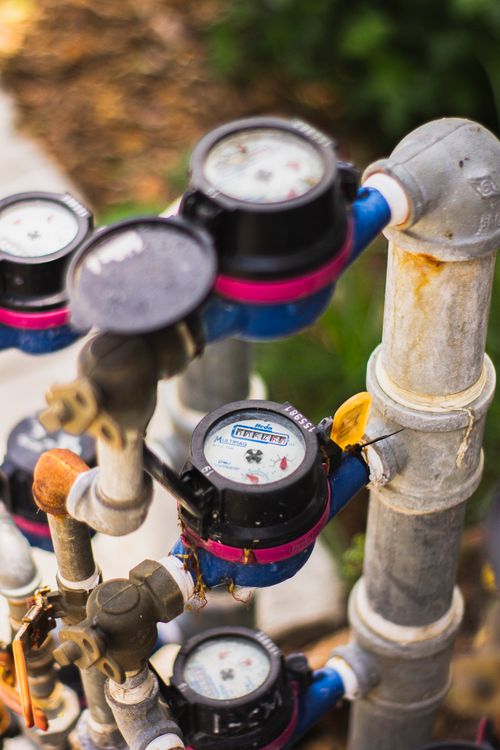
Why the water meter is the first thing to check
A water meter measures all the water that passes through the service line into your property. When every tap, appliance and irrigation zone is off, nothing should be passing through. If the meter is still counting, water is going somewhere you cannot see.
That makes the meter a quick, simple way to answer the first question: is there a leak? It does not say where. A moving meter can mean a leak under the slab, in a wall, in the yard, at an irrigation valve or inside a toilet. The steps below narrow it down before anyone is called out.
Describe what you saw and we’ll take it from there.
The check, step by step
- Locate the meter. In most Texas neighborhoods it sits in a ground-level box near the curb or the edge of the property, with a lid marked for water. Lift the lid carefully and watch for insects and spiders. Some utilities ask customers not to touch anything inside the box beyond reading it.
- Turn everything off. Close taps, make sure the dishwasher and washing machine are idle, and pause the ice maker, irrigation system and any pool auto-fill.
- Look for the low-flow indicator. Many meters have a small dial, triangle or star that spins when even a trickle passes through. If it turns with everything off, water is moving.
- Write down the reading. Note the full set of digits on the register, including the small ones at the end.
- Wait. Leave every water use off for thirty to sixty minutes. Longer is better for small leaks.
- Read it again. If the numbers have changed, or the indicator kept moving, water is escaping.
Take a photo of the meter before and after. It makes the result easy to describe on a call and easy to compare later.
What the result tells you
The meter does not move
Nothing is leaking while the water is off. If your bill is high, the cause is more likely use than a leak, or a leak that only shows up when water is running, such as a fixture that is only under pressure when it is opened.
The meter moves slowly
A slow, steady creep is typical of a pinhole leak in a supply line. Slab leaks often start this way. The loss is small in a day and larger over a billing cycle.
The meter moves quickly
A fast-moving meter points to a larger leak. If water is visible in the yard or on the floor, treat it as urgent.
The change is too small to see in an hour
Try again overnight. Read the meter before bed and first thing in the morning, with nobody using water in between.
A technician can tell whether the leak is under your slab.
Narrowing down where the water is going
If the meter moved, the next step is to work out which part of the property the water is leaving from. The house has a main shutoff valve, usually at the home itself, and that valve splits the system in two.
- Close the main shutoff and watch the meter. If it still moves, the leak is on the service line between the meter and the home. That pipe often runs through yard soil and may pass beneath a driveway or the edge of the slab.
- If the meter stops with the main closed but moves again when the valve is reopened with everything off, the leak is on the house side. That includes pipes in walls, in the attic and under the slab.
Before concluding that the slab is involved, rule out the common household causes: a toilet that keeps refilling, a dripping outdoor tap, an irrigation zone valve that does not seal, or a water treatment device that is cycling. A technician will check these as well, but a minute spent looking can save an appointment.
Do not dig, break concrete or cut into pipes to look for the leak. Locating a leak under a slab is work for a technician with the right equipment.
Signs that point to the slab
A moving meter combined with any of the following makes a slab leak more likely:
- A warm or hot spot on a floor, especially on tile or hard flooring
- The sound of water running or hissing when everything is off
- A damp patch, a musty smell or discoloration on carpet or baseboards
- Low water pressure in a house that had normal pressure before
- A water heater that seems to run constantly or never catches up
Any one of these can have other causes. Together with a meter that moves, they are enough to justify a proper leak search. The warm spot page and the running water page explain each sign in more detail.
A local crew knows how homes in your area are usually plumbed.
Meter checks in Texas homes
Many Dallas-Fort Worth homes built from the 1960s through the 1990s have water lines running through or under the slab. The clay soil under North Texas moves with the seasons, and in hot, dry summers it shrinks away from the slab and pipes. Over time, that movement is one reason a small leak can turn up years after a home was built.
Houston-area homes sit on soil with a high water table, which can mask a slow leak because the ground is already damp. In Central Texas, hard water is common, and mineral scale and corrosion can wear on older copper. In each case the meter gives the same signal: water is moving when it should not be.
If you rent the property or manage it for an owner, take the photos and send them along with the date and time. A before-and-after record is the clearest way to show what you found.
Describe the signs you have seen.
What happens after a moving meter
When the meter points to a leak on the house side, a technician confirms which line is involved, usually by isolating sections of the plumbing and checking each against pressure. Acoustic listening equipment and thermal imaging are then used to pinpoint the spot before any floor is opened. The technician should explain what was found and what the options are before work begins.
Most leaks are not an emergency in the first hour, but a meter that keeps moving wastes water and may be causing damage you cannot see. Closing the main shutoff slows the loss if you cannot get a technician right away. Closing it is safe, and it is the one thing to do while waiting.
If the meter did not move at all, you have learned something useful, and a call is not needed for the leak itself.
Same-day and emergency response in many areas.
Water meter leak check questions
Thirty to sixty minutes is enough to show a moving leak on most meters. For a very slow leak, read the meter before bed and again in the morning, with no water used in between.
It is usually in a ground-level box near the curb or the edge of the property line, often with a lid marked for water. In some neighborhoods it sits near the street, and in a few cases on the side of the home.
Many meters have a low-flow indicator that spins or flashes when water passes through, even very slowly. If it moves with every tap and appliance off, water is escaping somewhere.
It means water is leaving the system. It could be under the slab, in a wall, in the yard, at an irrigation valve or inside a toilet. A technician narrows it down with isolation tests and leak location equipment.
Yes. Closing the main valve at the home stops water entering the house plumbing and slows any loss on the house side. If you are unsure where it is, the technician can show you.
That points to the house side of the plumbing, which includes lines in walls, the attic and under the slab. The service line between the meter and the home is then less likely to be the cause.
Yes. Note the dial or the leak indicator with everything off, wait a few minutes and look again. Write down both readings and tell the technician what you saw.
Not for a leak. If you still see warm floors, damp spots or sounds, mention them when you call, because a leak that only shows under certain conditions is still possible.
Yes. A toilet that keeps refilling can move the meter with all taps off. It is worth a quick look before assuming the leak is under the slab.
Let a local crew confirm what the meter is telling you
If the meter moved, call and we’ll connect you with a local technician who can find the leak.
One call connects you with a local leak-detection crew.